
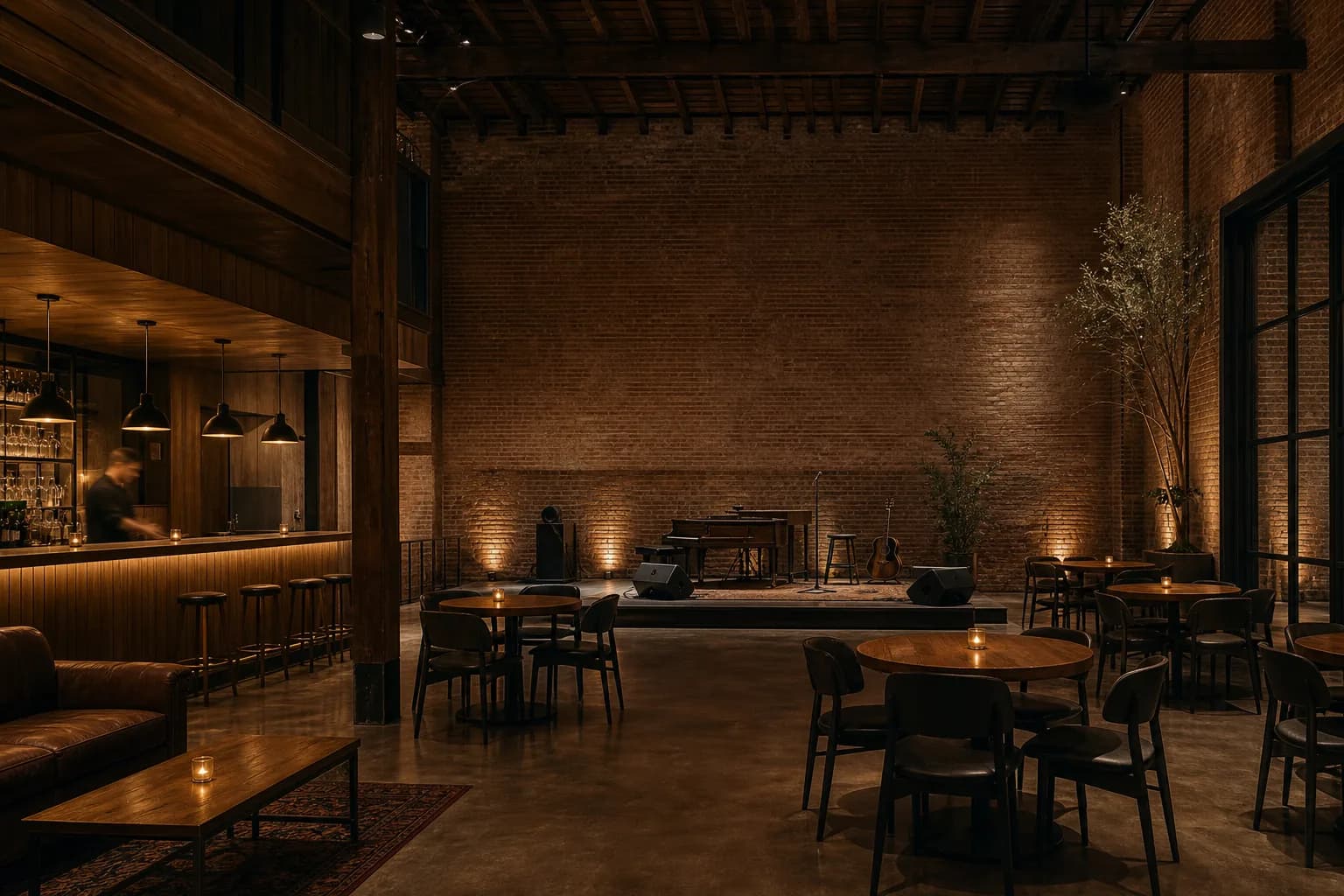
The venue
The Fennec sits inside the American Laundry Co. building in Birmingham's Parkside district, a few blocks from Regions Field. The 30,000 square foot, two-story property houses five distinct spaces, including a main stage for live music, a sports bar built for gameday crowds, and event space that hosts everything from watch parties to private functions. It's the kind of property where Tuesday night and Saturday of a Barons homestand or a sold-out show are barely the same business.
The operational problem
Independent, multi-space venues like The Fennec don't have the luxury of a big chain's deep labor pool. A weeknight might run on a skeleton crew. A concert, a game-day slate at Regions Field, or a private event booked into The Social or The Cypress can multiply the floor, bar, and back-of-house headcount overnight, and then drop right back down. Over-hiring to cover the peaks means paying for idle labor most of the week. Under-hiring means slow tickets, bottlenecked bars, and a bad night for guests during the exact moments that matter most for revenue and reputation.
For an operator running five spaces under one roof, staffing has to flex space by space and event by event, not just week by week. That's not a problem a fixed headcount roster solves well, and it's not something a single venue can absorb by hiring more full-time staff, because the surge days aren't predictable enough to justify the payroll on the slow days.
How Croux runs inside their operation
The Fennec posts shifts against its actual event calendar, game days, concert nights, private bookings, and lets Croux's marketplace of vetted, local hospitality workers fill them. Over 40 months and 744 shifts, that's meant scaling crew up for the nights that need it and back down for the nights that don't, without carrying that labor cost as fixed overhead. Because Croux workers can pick up shifts across multiple venues, the same pool that fills a Thursday concert at The Fennec is available and motivated to come back for the next one, which is a big part of why The Fennec's repeat-worker rate sits at 77%.
Surge nights covered, and the crew comes back
A 91% fill rate means Croux covered the vast majority of The Fennec's posted shifts, including the surge nights that put the most pressure on the operation. The 2% no-show rate adds another layer of predictability: once workers accepted a shift, 98% showed up.
The 77% repeat-worker rate compounds that reliability. Most workers at The Fennec returned for another shift, giving The Fennec a crew with prior experience in its multi-space operation instead of requiring the team to start from zero each time demand surged.
What this means for your venue
Independent entertainment and event venues run on a calendar that doesn't look like a 9-to-5 business: game days, concerts, private events, and everything in between. The Fennec now has a flexible crew that scales with that calendar, backed by local workers who return shift after shift.
The result is a venue that can add labor when the building is full without carrying peak headcount through the quiet nights. Staffing follows the event calendar while reliability and familiarity build over time. See venue staffing, event staffing, and stadiums and conventions, then talk to our team.
Related staffing pages