
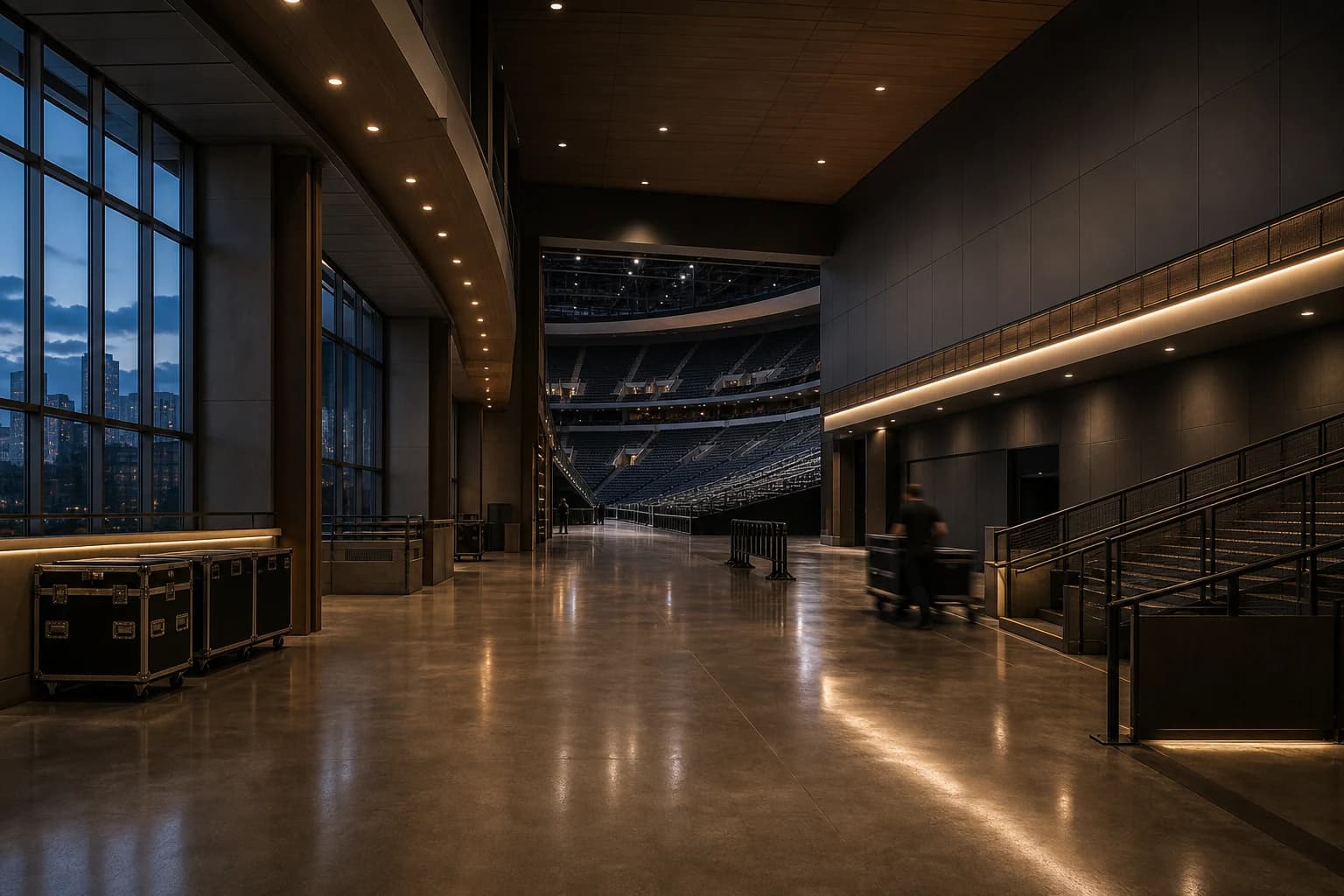
The venue
PMI Entertainment Group has managed venue operations in Green Bay since 1983. Today it runs the Resch Center, a 10,500-seat arena, alongside the 125,000-square-foot Resch Expo and the Meyer Theatre, together drawing close to a million patrons a year. The Resch Center is also home ice and home court for the Green Bay Gamblers (USHL hockey), the Green Bay Phoenix (Division I basketball), and the Green Bay Blizzard (indoor football), which means the building rarely sits idle for long.
The operational problem
Event-night labor at a venue like the Resch Center is a spike, not a steady state. A concert or playoff game can require a much larger crew for load-in, concessions, hospitality, and turnover, followed by a quieter stretch before the next date on the calendar. Carrying peak headcount through those quieter periods is expensive, while rebuilding the crew for every event creates a new coordination burden each time.
Venue work also rewards familiarity. Returning workers arrive with prior experience in PMI's operation, reducing how often the event team has to start from the beginning before doors open.
How Croux runs inside PMI's operation
PMI uses Croux as a flexible crew behind its event calendar. Over 29 months and 342 shift requests, PMI has posted event-specific needs and built a crew of 300 distinct workers across concerts, hockey, basketball, arena football, and expo events.
Most of the crew comes back. Eighty-three percent of filled shifts went to workers who had already worked a PMI event. Instead of introducing an entirely new roster each night, PMI can bring back people with prior experience in its venues and event operations.
People who know the building before doors open
For an events team, the metric that matters isn't just whether a shift gets filled. It is whether the person walking in already understands what has to happen before the doors open.
A 300-person crew gives PMI real depth across concerts, hockey, basketball, arena football, and expo events. An 83% repeat-worker rate means most filled shifts go to people who have already worked a PMI event, preserving familiarity instead of resetting the crew every night. Across 342 shift requests and 29 continuous months, that returning crew has become a durable part of how PMI prepares for an unpredictable calendar.
Why this matters for venue and event operators
If your building runs on an events calendar rather than a steady schedule, the question isn't whether you can find people for a Saturday show. It is whether the people who arrive already know your building. PMI's experience shows what that looks like at scale: a large, returning crew that treats event work as an ongoing relationship rather than a one-off assignment.
Instead of rebuilding the labor pool for every event, PMI can draw from a crew whose experience compounds across the calendar. That is the difference between filling isolated shifts and building event staffing the operation can rely on. See stadiums and conventions and event staffing, then talk to our team.
Related staffing pages