
The company
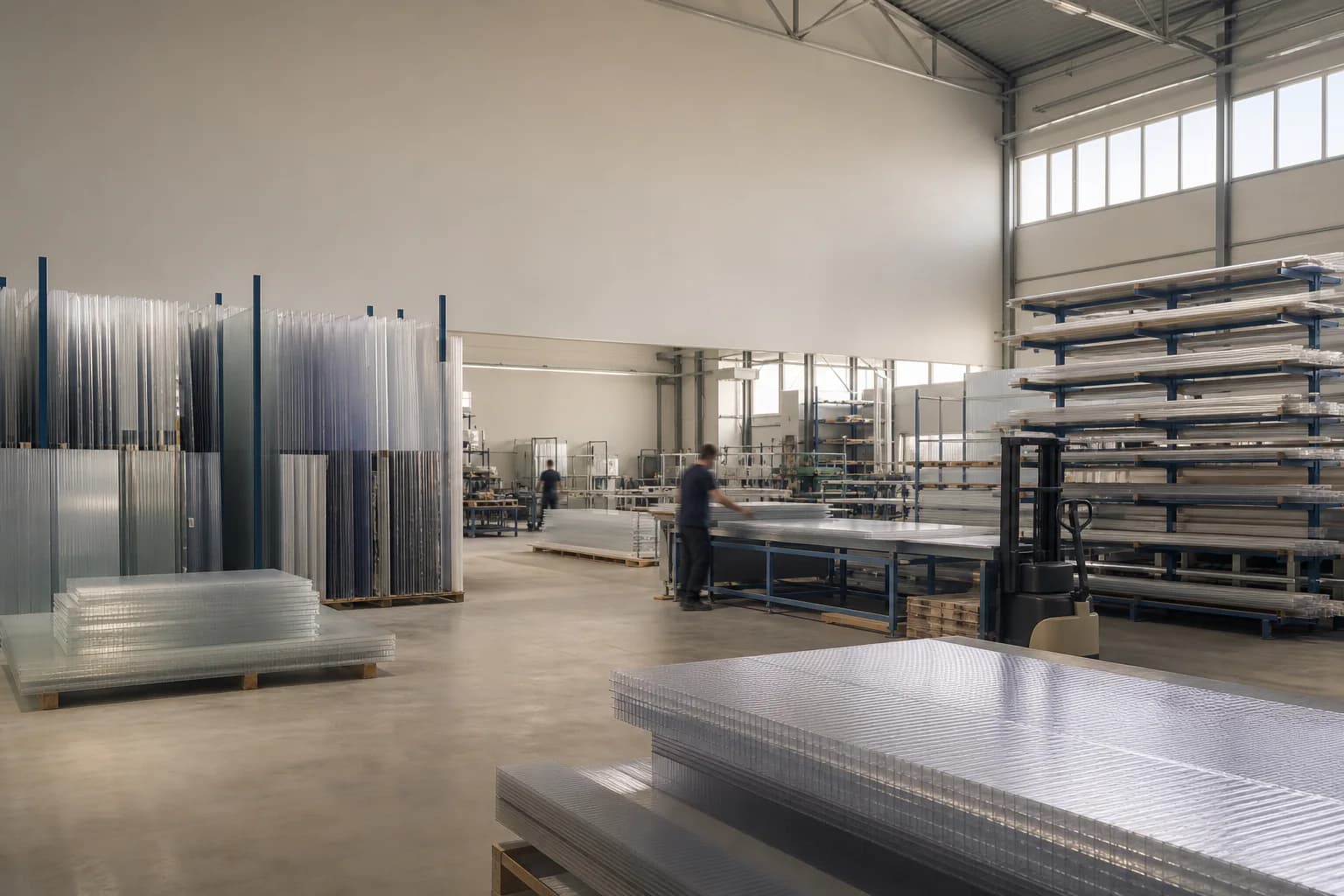
AmeriLux International is a De Pere, Wisconsin manufacturer and distributor of polycarbonate, PVC, and HDPE sheet products used in construction, agriculture, and building envelopes, including multiwall and corrugated polycarbonate panels, PVC wall forms, acrylic sheet, and composite decking. Founded in 2004, the company has grown into a value-added supplier with its own extrusion joint venture and an in-house freight operation, all based in the Green Bay area.
That kind of operation runs on warehouse and production labor as much as it runs on sales. Sheet goods have to be received, cut, packed, and loaded, and the pace of that work tracks the building season more than the calendar.
The operational problem
Demand for building materials is seasonal. Construction activity picks up in spring and holds through the summer and fall, which means order volume, and the warehouse and production labor needed to keep up with it, doesn't stay flat across the year. AmeriLux needs to flex its floor headcount up for those stretches without carrying that headcount through the slower months.
Green Bay is a smaller labor market than a major metro, which narrows the pool of people available on short notice when a shipping push or a production run needs extra hands. And warehouse work with large panel goods isn't interchangeable labor. Workers need to learn how product is staged, how it's handled without damage, and where it moves through the building, before they're fully useful on the floor. Bringing in an unfamiliar worker for a single shift means spending part of that shift on orientation instead of output.
How Croux runs inside the operation
AmeriLux uses Croux as a flexible crew for warehouse and production shifts, posting requests as order volume and shipping schedules require. The operating model is built around returning workers rather than an entirely new roster for every request.
That repeat pattern matters on a production floor. Workers who have completed prior shifts at AmeriLux return with experience in the operation, reducing the time the team spends introducing the workplace and its routines from the beginning.
Results, in operational terms
Over roughly 15 months and 170 shift requests, Croux filled 90% of them with a 2% no-show rate. Of the 54 distinct workers who picked up a shift at AmeriLux, 79% returned for more than one, roughly four out of five, across about 1,812 hours of work.
The trailing 12 months show the same return pattern holding: 101 requests, 86% filled, and a 79% repeat-worker rate. The relationship continues to draw largely from workers with prior experience in the operation.
For a warehouse and production environment, that repeat rate has practical value. It means fewer shifts begin with a worker encountering the operation for the first time, preserving familiarity as staffing flexes with demand.
Reliable labor for a seasonal, small-market operation
AmeriLux needs shifts filled with workers who already know the floor when the building season picks up. That's what 170 shift requests and a 79% repeat-worker rate have delivered.
See light industrial, then talk to our team about your production floor.
Related staffing pages